

From the Program Manager, August ’25: Scientific Milestones and Management Transition
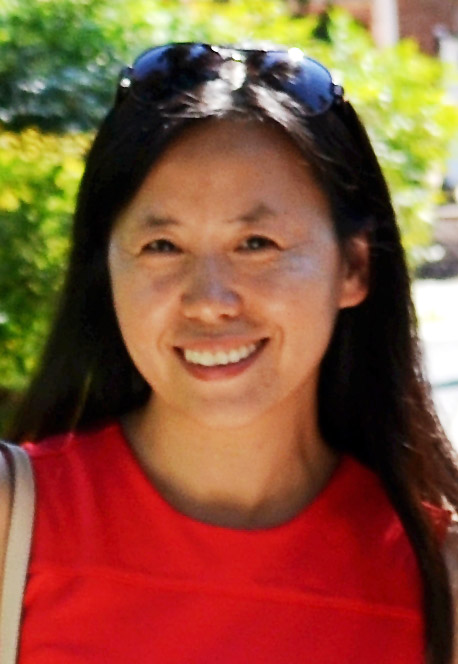
Xujing Davis, E3SM Program Manager, DOE BER
Scientific Milestones and Management Transition
Welcome to the E3SM newsletter. I hope you had the opportunity to enjoy the summer with family and friends. Over the last few months, E3SM team has been productive in documenting its major achievements, making exciting progress and shaping its future plans. The team’s work has also received notable recognitions.
Scientific Milestones
One major accomplishment is the completion of the manuscript detailing the significant scientific and technical advancements in the coupled low resolution version 3, or E3SMv3.LR. This version represents a substantial upgrade, incorporating improved atmosphere, ocean, sea ice, land, and river components. A key innovation is the new tri-grid configuration, which harmonizes land and river model grids for more precise process coupling. Importantly, the team successfully resolved two critical historical biases from previous versions in trends of global surface air temperature and ocean heat content trend. These enhanced capabilities in E3SMv3.LR, the result of a multi-year, full team effort, provide a more robust tool for Department of Energy (DOE) and earth science community’s scientific explorations and applications. Congratulations to the full team!
The E3SM Land Team recently achieved a significant milestone by developing, rigorously testing, and scaling uELM on leadership-class supercomputers, an exciting progress toward the exascale-ready land model. To support the DOE’s mission and deliver predictions relevant to critical energy infrastructure, accurate ultra-high resolution modeling of land systems is essential. This work demonstrated the model’s remarkable exascale scalability and exceptional I/O performance. Recognized as a SCALE 2025 finalist in the International Symposium on Cluster, Cloud, and Internet Computing (CCGRID), this research establishes uELM’s capability for high-resolution, kilometer-scale simulations over vast geographical areas, setting a robust computational foundation for future Earth system modeling.
Recognition
The E3SM SCREAM team has been honored with the Lawrence Livermore National Laboratory (LLNL) Deputy Director’s Science and Technology Excellence in Publication Award for their paper, “To Exascale and Beyond—The Simple Cloud-Resolving E3SM Atmosphere Model (SCREAM).” This publication introduces SCREAM, a cutting-edge, performance-portable atmospheric model capable of global 3 km resolution simulations, built to leverage modern CPU/GPU computing. The award recognizes the paper’s significant impact and its demonstration of technical innovation in earth system modeling. Congratulations to the SCREAM team and thanks to LLNL for its commitment to pioneering research and excellence in scientific publication!
Exciting Progress Toward Improved Model Physics – Bug Fixes Column Continued
Following our first heroic bug fix story on snow grain scattering in the last issue, I believe you will be intrigued by another heroic bug fix concerning the missing clouds in the atmosphere. In this article, the team shares how the root cause of the mysterious missing clouds was discovered and resolved after extensive, months-long debugging. The fix for this single error not only restored the missing clouds but also resolved previously observed temperature biases, demonstrating that complex problems can stem from minor, unexpected coding inconsistencies. I want to thank the team for their commitment and passion toward improved model physics!
New Software and Workflows
ChemDyg v1.1.0, an open-source Chemistry Evaluation and Diagnostics Package for E3SM, is now available. This modular tool streamlines atmospheric chemistry evaluation, allowing researchers to assess model performance, tailor development, and analyze processes, and can be run as a zppy plugin. ChemDyg accelerates model development, leading to more accurate simulations and enhanced understanding for Earth system and air quality modeling.
Thanks to the collaborative work between E3SM and EAGLES teams, the MAM4xx atmospheric aerosol library has been integrated into EAMxx and went through extensive automated testing. This testing verifies solution correctness and ensures proper function across diverse CPU and GPU hardware, crucial given hardware variations. Leveraging Sandia National Laboratories’ AT2 software, the team conducts continuous-integration testing on secure, leading-edge computing resources like NVIDIA H100 GPUs, allowing for immediate and frequent testing of new code submissions and nightly production code validation, ensuring high code quality for EAMxx and E3SM.
A new, streamlined workflow for generating datasets from E3SM simulation output has been implemented at Argonne National lab. This system efficiently manages data by retrieving only necessary archives from NERSC “just-in-time,” minimizing transfers and local storage. It automates the extraction and conversion of data for CMIP6 publication, including complex variable calculations, and purges unneeded files to prevent disk issues. This optimized workflow, developed in response to the retirement of LLNL’s disk resources, replaces previous manual processes, ensuring continuous and efficient data processing.
Research Highlights
The selected research highlights include advances in land and hydrological modeling, showcasing improved simulations of forest canopy structure through updated leaf respiration gradients. Furthermore, new capabilities include the first continental-scale mapping of soil organic carbon to dissolved organic carbon transformation using machine learning, enhanced representation of river networks via unstructured meshes, and a novel urban hydrologic model for flood dynamics. Finally, new research also reveals the divergent responses of rain-on-snow extreme flood events to earth system change using a kilometer-scale land surface model.
Broad Engagement in Earth System Modeling Activities
E3SM members continued their active engagement with broad earth system modeling activities such as via the Dynamical Core Model Intercomparison Project (DCMIP) Summer School. E3SM and Scientific Discovery through Advanced Computing (SciDAC) researchers, including Mark Taylor, Peter Bosler, and Oksana Guba, played a key role in organizing the DCMIP Summer School in June 2025. This event hosted over 50 students and postdocs, providing hands-on experience with modern atmospheric dynamical cores, including E3SM’s, to simulate atmospheric phenomena and explore new modeling techniques, including machine learning approaches.
Upcoming Events
As you read this newsletter, the E3SM team, its key ecosystem project scientists, and all EESSD colleagues including myself are gathered for the E3SM All-Hands Meeting in the D.C. area and online. A primary objective of this meeting is to strengthen coordination between E3SM and its ecosystem projects. Given the role of E3SM at DOE providing foundational modeling capability and as an integrator of all relevant EESSD research activities, the E3SM team is dedicated to refining its collaboration strategy and implementation plans to maximize E3SM’s scientific impacts and to fully leverage DOE’s relevant investments for further progress. This All-Hands meeting provides a crucial opportunity to gather input from ecosystem projects and integrate feedback into these plans.
Another important upcoming event is the Annual SciDAC PI Meeting. While in-person attendance is by invitation only, remote participation is open for registration until Friday, September 12th, 2025. On a related note, I announce that Sarat Sreepathi, our E3SM member, a deputy lead for the Infrastructure Group, and the Biological and Environmental Research Program (BER) representative on the SciDAC Coordination Committee, has departed Oak Ridge National Laboratory (ORNL). Mark Taylor has assumed Sarat’s role to represent BER on the SciDAC Coordination Committee to facilitate and strengthen the BER-Advanced Scientific Computing Research Program (ASCR) SciDAC partnership focusing on E3SM development. We wish Sarat the best in his new endeavors and thank him for his contributions to E3SM and SciDAC. Please join me in welcoming Mark to this new role and thank him for his service in this vital BER-ASCR partnership.
A Personal Note and Concluding Remarks
As many of you are aware, I am transitioning from my role at BER EESSD to serve as a SciDAC Program Manager at ASCR within DOE Office of Science, effective September 7th. It has been an incredibly inspiring, rewarding, and fulfilling 5+ years working with you all, contributing to the advancement of E3SM as an integral part of U.S. and global earth system modeling efforts aligned with DOE mission needs. I extend my sincere thanks to all past and current E3SM members, and the broader E3SM Science Community, for your dedication and contributions to where E3SM is today and for the exciting potential it holds for the future. I am deeply grateful to have been part of this remarkable journey with you, and I look forward to the opportunity to collaborate with some of you in my new role. I will eagerly anticipate the many significant advancements and breakthroughs from the project in the coming years and beyond.
My gratitude also extends to all DOE and interagency colleagues, and the broader earth science community whom I have had the privilege to work with over the years, for your contributions and support! I look forward to our path crossing again.
Last but not least, congratulations to the E3SM team for another few fruitful months, and keep up with the excellent work!
Warmest Wishes,
Xujing Davis
P.S.: My Last Minute Response to the E3SM Team’s Letter
After I finished the draft of this message, I became aware of the Letter from the team led by our E3SM Quarterly Newsletter Chief Editor Dr. Renata McCoy and the E3SM Executive Committee. Thank you, Renata, Peter, Ruby and Mark and the team for such a heartwarming and touching message, and all the credit you gave me that is more than I deserve! I want to emphasize that E3SM is such an enormous effort and it is the team from the past and present, who have made the real difference. The strong support from DOE (Office of Science, BER, EESSD and ASCR), the distinguished leadership of Dorothy Koch, David Bader, Peter Caldwell, Ruby Leung, Mark Taylor, Renata McCoy and other E3SM leads led the team successfully through very challenging earlier years in establishing the project, and steadily with unwavering commitment through recent times, which together have built solid foundation and strong momentum for the recent and future successes.
For me, I have been deeply honored to work alongside such a talented and dedicated team, and am immensely proud of what the team members have achieved individually, as a team, and we achieved together. I am so grateful that I have been part of this wonderful journey with everyone. Thank you!!!
