

From the PI November ’25: Success Amidst Change
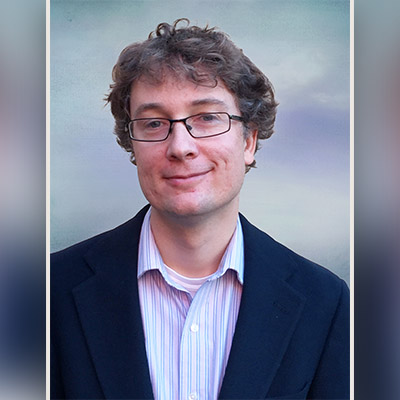
Dr. Peter Caldwell, E3SM PI
Welcome to another exciting E3SM newsletter. We had a productive quarter with 11 papers published, 3 team members named fellows of AMS and AGU, and our high-resolution E3SMv3 model finalized. In addition to better capturing extremes, our new high resolution model has a markedly better Atlantic Meridional Overturning Circulation, a feature which E3SM has struggled with since its inception.
Another breakthrough this quarter is enabling biogeochemistry throughout our whole model for the first time. We have been working towards this goal since the project started 10 years ago. This success comes on the heels of completing two other decade-long efforts by our Human Earth Systems group: integrating the Global Change Analysis Model (GCAM) and the Functionally Assembled Terrestrial Ecosystem Simulator (FATES) into coupled E3SM. Together, these capabilities greatly enhance DOE’s ability to probe the two-way interactions between humans and our environment. Our aerosol experts also reached a major milestone by completing a report documenting the level of readiness of the Modal Aerosol Model in C++ (MAMxx). Based on this report, we will use prescribed aerosols for our next E3SM release (v4.0, due Jan 1, 2028) and will have a special release later with MAMxx prognostic aerosol.
This quarter has also been a period of great change as we sync up with DOE’s changing priorities. For several years now, BER has been pushing E3SM to focus on seasonal-to-decadal (S2D) prediction and artificial intelligence (AI). We conducted deep dives into what E3SM should do in these areas and have recently created new S2D and AI groups to carry out the resulting pilot projects. The goal of these groups is to deliver impactful results in these areas by the time E3SM writes its phase 4 proposal in 2027. See E3SM Seasonal-to-Decadal (S2D) Prediction Effort – A Pilot Study and E3SM AI for Model Emulation – A Pilot Study for an in-depth look at these efforts.
At our all-hands meeting in Bethesda MD this August, E3SM unveiled a plan for improving synergy with the broader DOE ecosystem. One way we did this is by inviting 40 members of external projects and their program managers to attend; in the future E3SM will host project-only all-hands in the winter and community meetings in the summer. We will include community output requests in our upcoming simulation campaigns (which will be publicized via e3sm-ecosystem@llnl.gov). Pathways were advertised for submitting bug reports and suggesting new features.
Several exciting new simulation campaigns are underway or planned for the coming months. We are in the middle of a large ensemble of historical-to-near-future simulations with low, medium, and high ECS variants. An experiment evaluating ECS in the Simple Cloud-Resolving E3SM Atmosphere Model (SCREAM) is also ongoing. A pre-industrial control simulation with the E3SMv3 high-resolution configuration is also spinning up, with a historical run to follow shortly. These runs are part of E3SM’s intended contribution to phase 7 of the Coupled Model Intercomparison Project. For our S2D ambitions, we are preparing a set of 10 member, 2 yr hindcasts starting in May and November of every year between 1980 and 2015. We are also about to start simulations testing the impact of ocean waves on sea ice in the Arctic, liquid cavities in sea ice off the coast of Antarctica, and coupled biogeochemistry. We are preparing for a series of weather hindcasts using SCREAM with 200m resolution over the entire continental US. All of these simulations will help us understand what we can and can’t trust our new models to predict and will also serve as the foundation for many upcoming analyses of expected impacts of extreme storms, the historical frequency of such events, viability of Arctic shipping, and other high-priority topics.
Finally, I’d like to thank the team for all their amazing accomplishments this quarter. As we move into the holidays, I hope you all get a chance to slow down and enjoy the season… perhaps with some light reading of some of the excellent stories in this edition of Floating Points!
Best wishes,
Peter Caldwell
