

From the PI, May ’26: Looking Forward to the Summer All-Hands
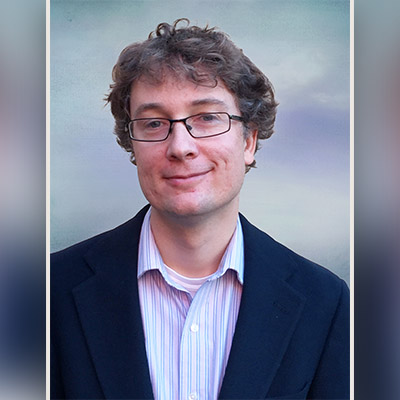
Dr. Peter Caldwell, E3SM PI
Dear E3SM community –
It seems like just yesterday that we held our last summer all-hands, but our next all-hands is just around the corner. It is amazing how much has changed, but also how much has stayed the same.
Our central task – producing a world-class Earth system model – has not changed much. Our world-class workforce hasn’t changed much, though this quarter Jennifer Holm has taken over from Ben Bond-Lamberty as Human-Earth Systems (HES) lead and Kate Calvin has rejoined the project as a HES deputy group leader while Nicole Jeffery has stepped down.
Simulation campaigns continue to be a major focus. The coupled team is performing HighResMIP simulations using the new v3 high-resolution model. The water cycle team is creating large ensembles for each of 3 different tunings of the low-resolution (LR) v3 model. Our polar team is engaging in a set of “BluePulse” experiments testing the interaction of ice shelf cavities and sea-ice/wave interactions for seasonal-to-decadal (S2D) predictability. We are also performing our first set of S2D experiments using the v3 LR model; this is a set of 2 year runs with 10 ensemble members starting in fall and autumn of each year between 1980-2018 for each of 3 different initialization methods.
Our future goals have crystalized around obtaining world-leading predictability on timescales of weeks to years, using Artificial Intelligence (AI) in innovative ways (in particular through collaboration with Genesis), and providing more direct benefit to Department of Energy (DOE)’s energy mission. These themes will feature heavily in our E3SM phase 4 proposal, which is due in January.
Our version 4 model is coming into focus, with our new Omega ocean model and ocean/sea ice coupling in particular making good strides. We are also making good strides in enabling faster, data-compressed, chunked output for AI training. The paper describing our new atmosphere model was one of the 10 most cited articles in JAMES published in 2024. Our v4 model release is planned for January 2028.
As part of our continuing efforts to improve communication and synergy with projects in the DOE Earth system modeling ecosystem, we started making our model development roadmaps public this quarter. Our hope is that knowing what E3SM is planning will help ecosystem projects plan for tools and features that will be useful for them as well as identify development they will need to do on their own to meet their mission.
I hope you enjoy this new issue of Floating Points and I will see you soon in Bethesda!
Peter
This article is a part of the E3SM “Floating Points” Newsletter, to read the full Newsletter check:
- E3SM Floating Points, May ’26: Looking Forward to the Summer All-Hands
