

Phase 4 Project Structure
As E3SM prepares for Phase 4, the project’s fourth funding cycle, the team is developing a new organizational structure to support the next stage of model development and scientific discovery. This work was captured in the Phase 4 white paper, which will guide planning for the upcoming proposal and the transition into the new phase. The updated structure reflects how much the project has evolved and what it will take to deliver on a more ambitious agenda centered on seasonal-to-decadal (S2D) prediction, artificial intelligence, and DOE-relevant energy and water security questions.
Timeline to Phase 4
Several key milestones will shape the transition to Phase 4. The white paper was due in late August 2026, with DOE feedback expected in early October. The new organizational structure is planned to take effect on October 1, 2026, aligned with the start of the fiscal year so that staff can plan clearly for FY27 commitments. The full proposal will follow in February 2027, with review in April and the start of Phase 4 expected in May 2027. Looking beyond the proposal timeline, Phase 4 is expected to support a v4 tag, v5 development and the start of coupled v4 runs in January 2028, helping connect project organization directly to scientific and technical delivery.
Matrix Organizational Structure
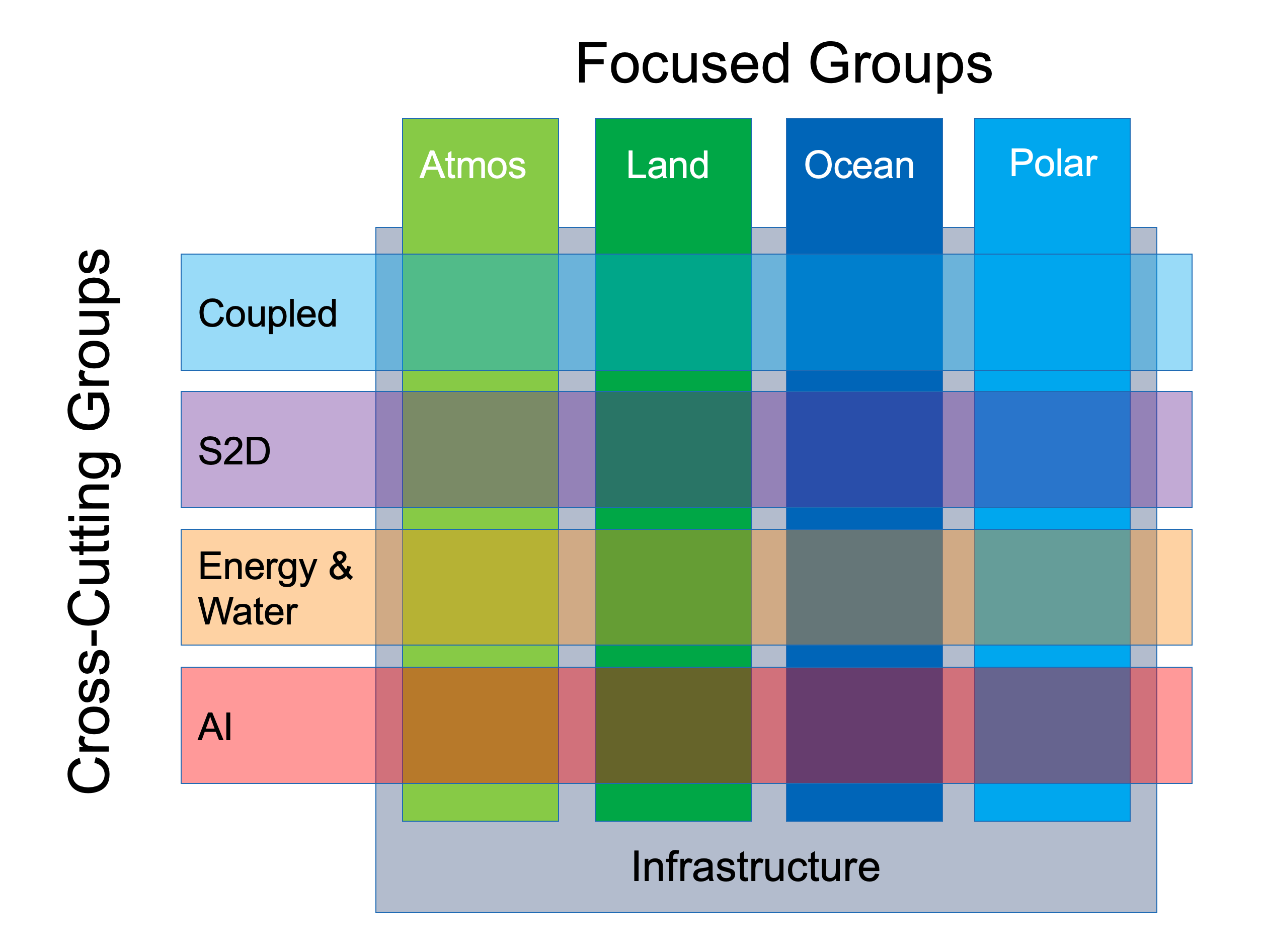
Figure 1. The E3SM Phase 4 Functional Matrix Structure
The new project structure will take a shape of a matrix structure (Fig. 1), designed to better connect the project’s core model components with the cross-cutting capabilities essential in Phase 4. E3SM will continue to rely on focused groups, Atmosphere, Land, Ocean, and Polar, that provide deep expertise in model development, while also using cross-cutting groups to integrate work in areas such as coupled modeling, seasonal-to-decadal prediction, energy and water, and AI. The infrastructure group interacts with and supports all other groups. A new Energy and Water Group will reinforce the project’s increasing focus on DOE mission needs. Staff will have a primary group for planning, mentorship, and accountability, while also contributing across group boundaries whenever the work requires it.
The Org Chart
The new leadership structure is being streamlined in phase 4 of the project. The formal leadership team (which includes the Executive Committee, the Group Leads and the Deputy Group Leads) will shift from more than 30 people to just over 20, a size better matched to a project of about 100 people and intended to improve coordination and accountability.
The focused groups in the new structure will be led by Chris Terai for Atmosphere, with Mark Taylor and Susannah Burrows as deputy group leads; Jennifer Holm for Land, with Gautam Bisht and Peter Thornton as deputies; Luke Van Roekel for Ocean with Steven Brus as deputy; and Andrew Roberts for Polar with Carolyn Begeman as deputy. Phase 4 also includes several cross-cutting groups. Chris Golaz will lead the Coupled Group, with Xue Zheng as deputy; Shaocheng Xie will lead the S2D Prediction Group, with Wuyin Lin as deputy; Bryce Harrop will lead Energy & Water; Naser Mahfouz will lead the AI Group; and Jill Zhang will lead Infrastructure with Jim Foucar as deputy (Fig. 2).
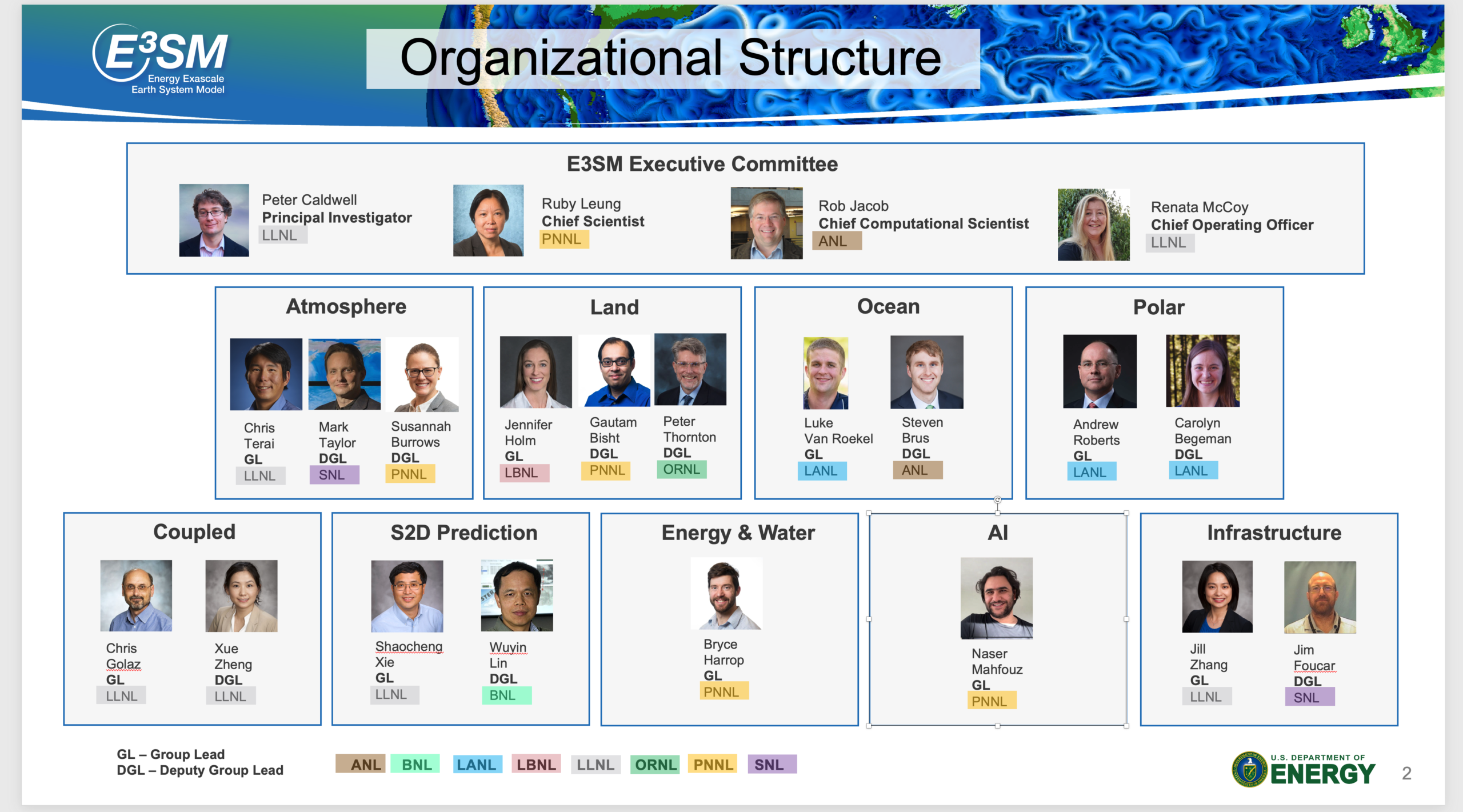
Figure 2. Phase 4 Organizational Structure. E3SM includes staff from eight national labs: Argonne National Laboratory (ANL), Brookhaven National Laboratory (BNL), Los Alamos National Laboratory (LANL), Lawrence Berkeley National Laboratory (LBNL), Lawrence Livermore National Laboratory (LLNL), Oak Ridge National Laboratory (ORNL), Pacific Northwest National Laboratory (PNNL), and Sandia National Laboratories (SNL).
These functional and organizational changes, which may still evolve as the project receives more guidance from DOE, are meant to position E3SM for a stronger and more integrated Phase 4, one that can support both the scientific use of E3SMv4 and the development of the capabilities needed for v5. As the white paper and proposal process move forward over the coming months, this new structure will provide the framework for how the project organizes its work for the next funding cycle.
Contact
- Renata McCoy, Lawrence Livermore National Laboratory
This article is a part of the E3SM “Floating Points” Newsletter, to read the full Newsletter check:
- E3SM Floating Points, Sep ’26: Preparing for the Next Generation of E3SM
