

SimBoard: A New, Modern Viewer for E3SM Simulation Evaluation, Metadata and Provenance
In E3SM, managing and tracking the growing number of simulations, including their evaluation results, metadata, and provenance, is an ongoing challenge. This applies not only to facilitating scientific analysis of existing runs, but also to supporting model development. As part of the E3SM code review workflow, developers are expected to generate and compare results against reference simulations, which requires consistent and reliable access to trusted outputs, diagnostics, and supporting metadata.
SimBoard, the new E3SM Simulation Viewer, is being developed to provide a unified interface for organizing and exploring simulation metadata, provenance, and results. The name reflects its purpose—a “board” where simulations can be viewed, compared, and discussed, much like a dashboard for the E3SM modeling ecosystem. SimBoard helps researchers see the broader context while easily drilling down into individual experiment details. It’s designed to bring clarity and cohesion to the expanding body of E3SM simulations, making it easier to understand how experiments relate, evolve, and contribute to scientific discovery.
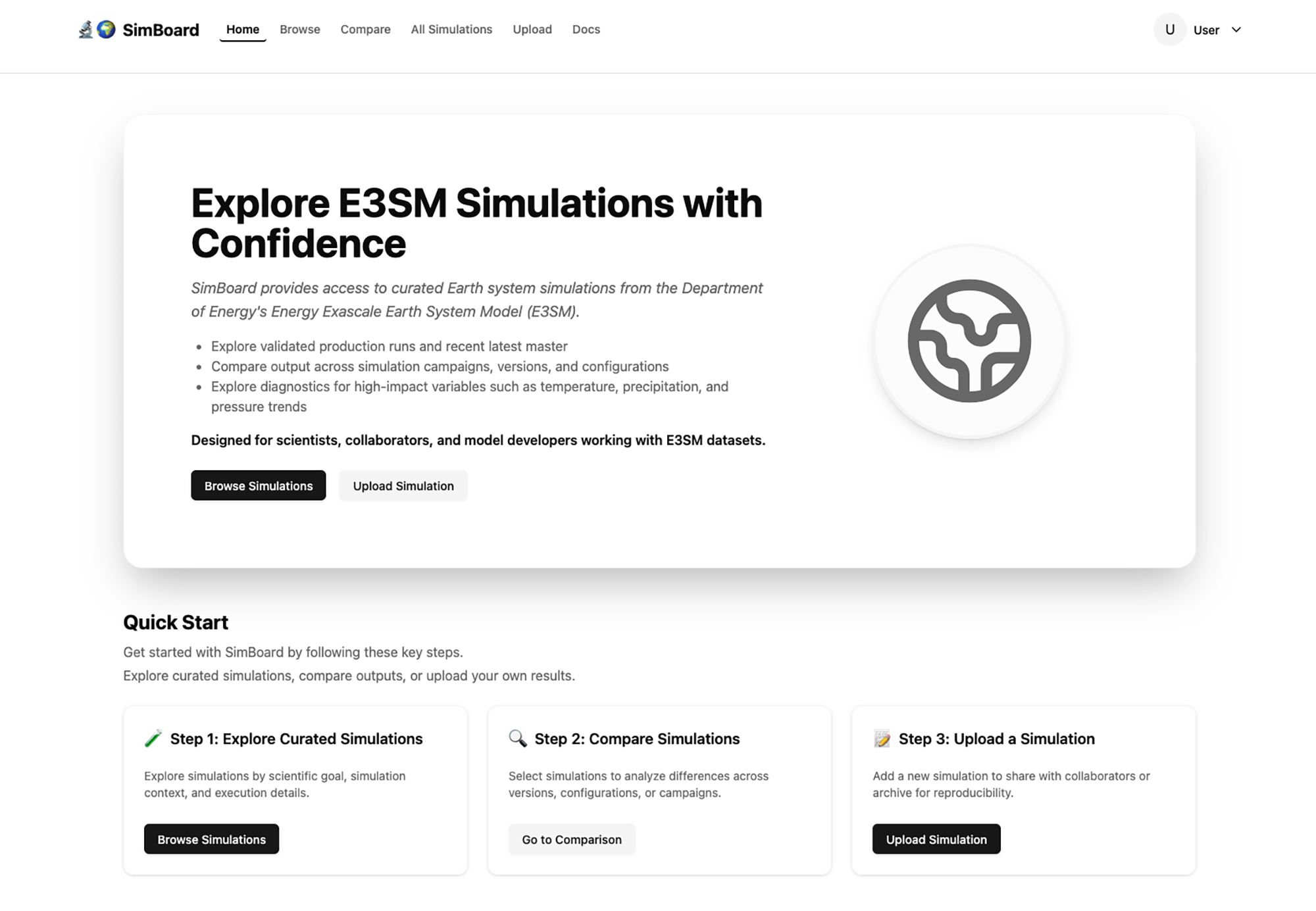
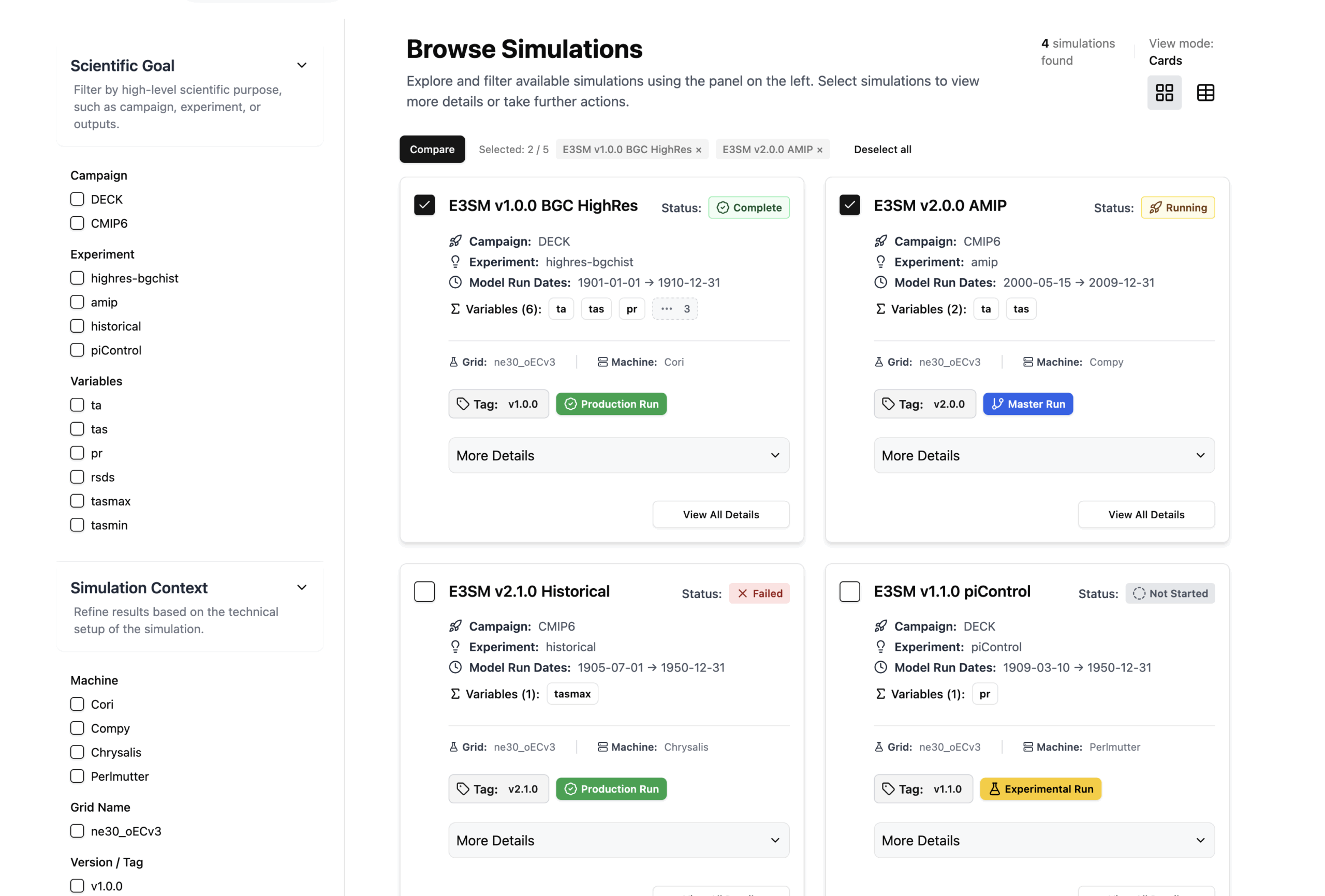
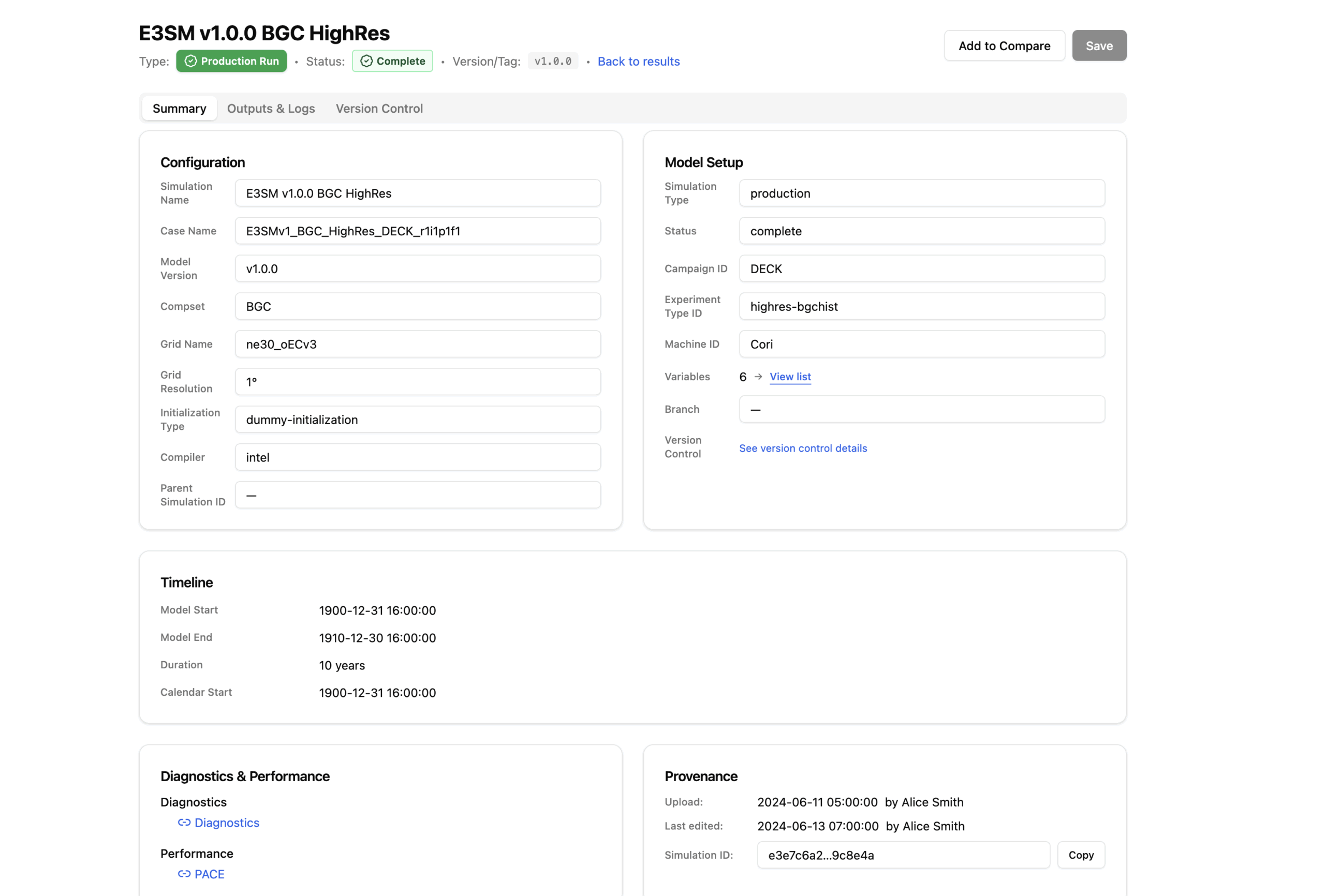
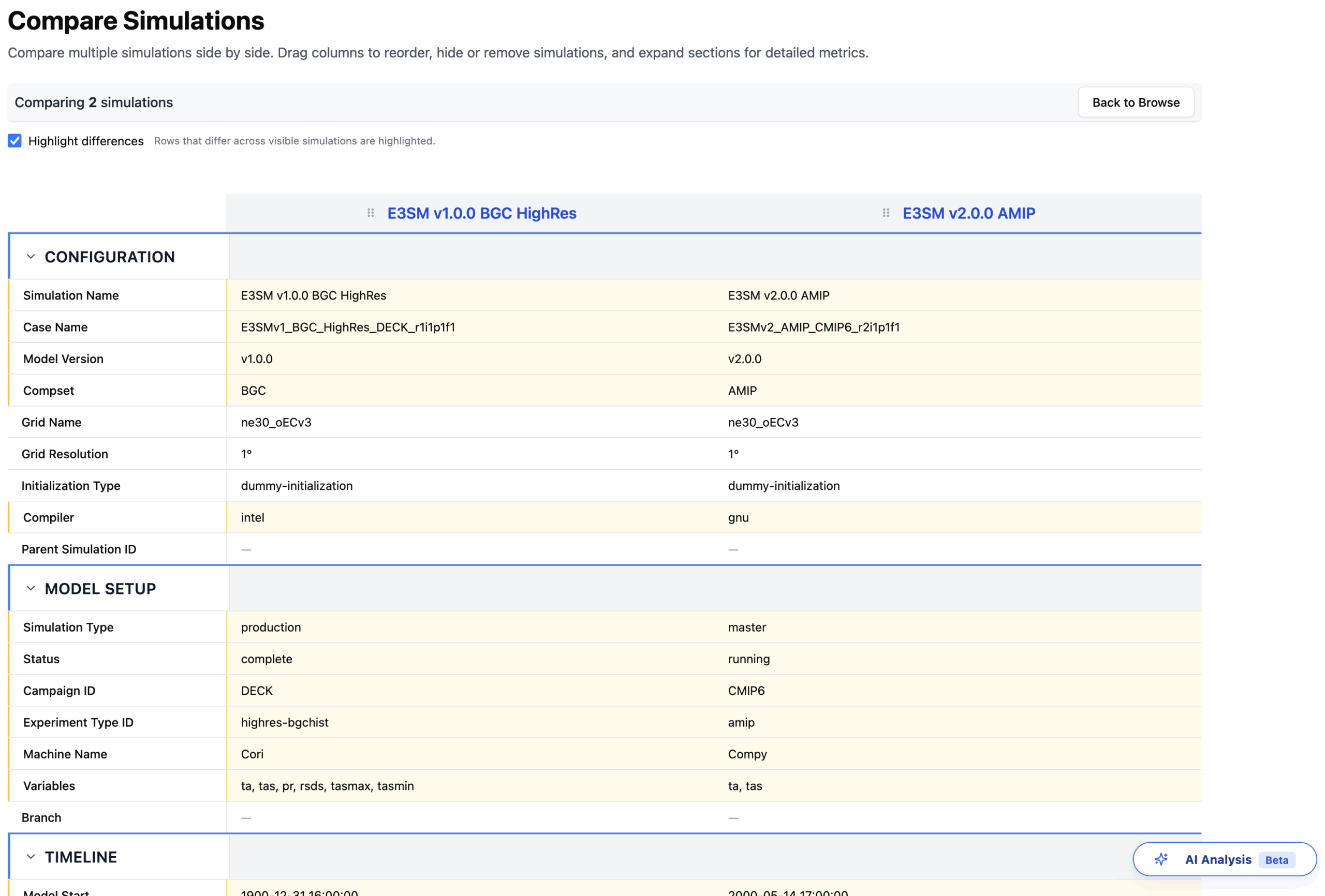
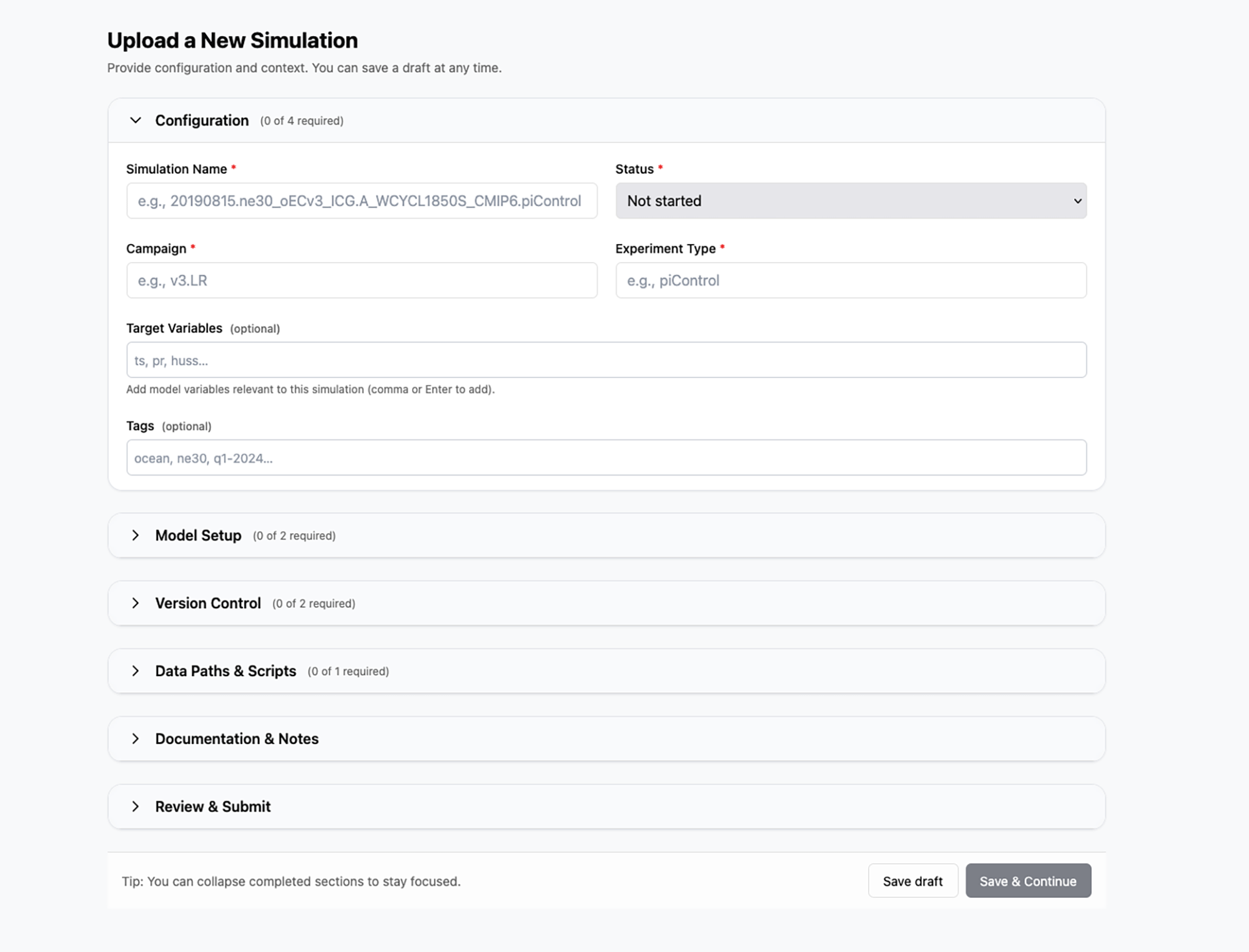
SimBoard will enable researchers and developers to efficiently browse, visualize, and compare model runs across configurations, versions, and computing environments. By centralizing this information, it will help users locate diagnostics, identify differences between simulations, and track provenance without navigating multiple file systems or documentation pages.
At its core, SimBoard will make E3SM simulations more discoverable and comparable. Users will be able to submit new simulations, view configuration and provenance details, and access related artifacts such as diagnostics, run logs, and archive locations, all within a browser-based interface. The comparison view is designed to highlight differences in setup, model versions, and outputs, helping users identify relationships and variations between experiments. By bringing this information together, SimBoard will promote transparency, reproducibility, and collaboration across the E3SM modeling workflow.
SimBoard is being built on a modern, extensible platform with a React and TypeScript frontend and a FastAPI and PostgreSQL backend. This design ensures strong performance, scalability, and maintainability. The system is being developed to integrate with tools such as E3SM Diagnostics for visual analysis and PACE for performance data. The team is also exploring opportunities to apply artificial-intelligence-assisted analysis to enhance the summarization and interpretation of simulation results, with the goal of helping researchers more quickly extract scientific insights from large ensembles of data.
Looking ahead, SimBoard aims to become a central hub for exploring and interpreting E3SM simulation data. The platform is in active development, now in its Phase 1 prototyping stage, with ongoing work focused on incorporating user feedback, expanding diagnostic integration, and exploring deployment on E3SM DOE computing environments. Current efforts also include automating simulation metadata collection through new development and by leveraging existing tools such as post-simulation workflows, CIME variable references, and PACE metadata. By simplifying access to simulation information, SimBoard will support the next generation of collaborative Earth system modeling and strengthen the foundation for transparent, data-driven research.
If you’d like to share feedback on SimBoard, the development team welcomes your input. They are especially interested in ideas for new features, design suggestions, and general impressions to help shape the tool as it continues to develop. You can contact the developers directly via the project’s GitHub repository by opening an issue or discussion, or email Tom Vo (vo13@llnl.gov).
