

Dave Bader is Retiring, Leaving a Legacy of Excellence and Leadership at E3SM
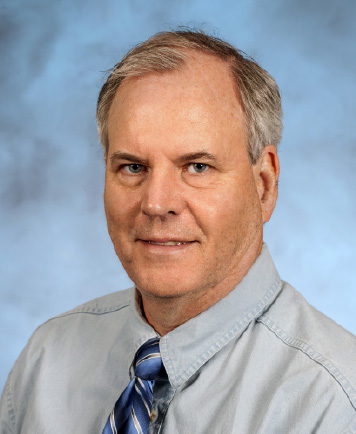
Dr. Dave Bader, E3SM PI, retiring
The Energy Exascale Earth System Model (E3SM) project bids farewell to its founding Principal Investigator, Dave Bader, as he is retiring after decades of transformative contributions to earth system science and computational modeling. Bader’s leadership has been instrumental in establishing E3SM as a cornerstone of the Department of Energy’s (DOE) earth system research initiatives, and his legacy will continue to shape the project’s trajectory for years to come.
Dave Bader’s career is marked by a steadfast commitment to advancing the understanding of Earth’s natural systems and fostering innovation in its modeling. After earning his B.S. in Engineering Science and M.S., and Ph.D. in Atmospheric Sciences from Colorado State University, Bader embarked on a journey that would position him as one of the foremost leaders in earth system science. His professional path includes several key leadership roles that have shaped the field of earth system modeling and computational science.
Bader joined Pacific Northwest National Laboratory (PNNL) as a research scientist after receiving his Ph.D., making significant contributions to the DOE atmospheric studies in complex terrain (ASCOT) program. Through the Intergovernment Personnel Act (IPA), Bader joined DOE Biological and Environmental Research (BER), where he was tasked in 1990 to start the Computer Hardware Advanced Mathematics and Model Physics (CHAMMP) program. CHAMMP was responsible for transitioning major model components from vector machines to massively parallel supercomputers. This work led to innovations in parallel spherical spectral transforms, spectral element dycores, physics parameterizations and new innovations in ocean and sea-ice modeling, all of which continue to be used in today’s E3SM and throughout the Earth System modeling community. DOE’s success under CHAMMP laid the foundation for DOE’s leadership in transitioning codes to Exascale architectures.
As DOE established the Accelerated Strategic Computing Initiative (ASCI) in 1996 to evaluate nuclear weapons in the absence of testing, Bader envisioned a similar program for earth system models called the ACPI. This effort expanded into a partnership with the Office of Science’s Advanced Scientific Computing Research and other science program offices into the highly successful Scientific Discovery through Advanced Computing (SciDAC) program and Bader served as its first director from 2001-2002. While CHAMMP was focused on innovations for individual components, ACPI and the first decade of SciDAC projects funded large multi-lab collaborations to put together fully coupled earth system models for DOE use. SciDAC also established an academic partnership program for longer-term research. SciDAC and its predecessor ACPI funded a number of highly successful efforts in the application of high-performance computing to Earth system prediction, including nested regional modeling for water resource assessment, ensemble modeling for uncertainty quantification, the introduction of ice sheet models, ocean initialization with assimilated conditions and continued to push for the highest resolution Earth system models on DOE’s advanced computing architectures.
Bader began his impactful tenure at Lawrence Livermore National Laboratory (LLNL) in 2003 as the Director of the Program for Coordinated Model Diagnosis and Intercomparison (PCMDI). Over six years, he played a pivotal role in advancing earth system model evaluation and intercomparison efforts. In 2009, he transitioned to Oak Ridge National Laboratory, where he championed cutting-edge research on Earth system change, contributing to groundbreaking research on earth system change. During this time, he also acted as an advisor to the Office of Science Director at the DOE, providing strategic guidance on earth system research initiatives.
In 2011, Bader returned to LLNL as the Earth System Program Leader, a position he held for nearly 14 years. Under his leadership, PCMDI played a pivotal role in the development and evaluation of Earth system models, including contributions to the IPCC assessments. He pioneered the CSSEF, a large collaborative project among eight DOE national laboratories, together with the National Center for Atmospheric Research, to transform the Earth system model development and testing process, thereby accelerating the development of Earth system models for predictive simulations. His work earned him recognition as a Fellow of the American Meteorological Society (AMS) and multiple awards, including the DOE Secretary’s Honor Award and the AMS Special Award.
In 2014, Bader became the Principal Investigator for E3SM, a multi-institutional project aimed at developing a high-resolution Earth system model capable of leveraging DOE’s exascale computing platforms. Under his guidance, E3SM achieved groundbreaking milestones, including the release of three major versions of the model (E3SMv1, E3SMv2 and E3SM v3) and the establishment of a robust framework for addressing critical earth system questions. Bader’s vision for E3SM emphasized the integration of advanced computational techniques with scientific rigor, enabling the project to tackle challenges such as regional impacts, water cycle dynamics, and extreme weather events.
Bader’s leadership extended beyond technical achievements; he fostered a culture of collaboration and innovation within the E3SM community. His ability to unite researchers from diverse disciplines and institutions created a durable environment where groundbreaking ideas could flourish. As a mentor and advocate for early-career scientists, Bader ensured that E3SM would remain a hub for scientific excellence and innovation.
As Dave Bader retires, the E3SM project reflects on the profound impact of his contributions. His legacy is not only evident in the scientific advancements achieved under his leadership but also in the collaborative spirit and vision he instilled in the project. Dave’s experience lives on in his successor Peter Caldwell. Ever since Peter joined LLNL in 2007 as Dave’s postdoc, Dave has mentored Peter in Earth System Modeling and project management. Caldwell’s appointment as the new PI marks a seamless transition of leadership, ensuring that Bader’s vision and values will continue to guide the project into the future.
The E3SM team extends its deepest gratitude to Dave Bader for his exceptional leadership and wishes him a fulfilling retirement. With Peter Caldwell now at the helm, the team is confident that Bader’s legacy will live on through Caldwell’s leadership, driving E3SM to new heights in earth system science and computational innovation.
This article is a part of the E3SM “Floating Points” Newsletter, to read the full Newsletter check:
